
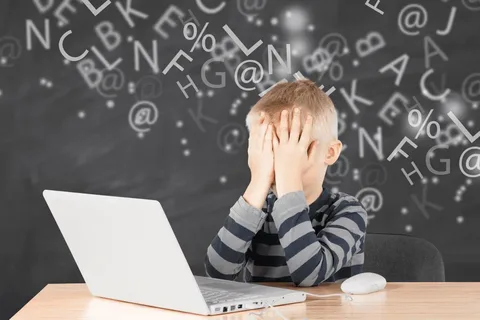
Learning disabilities refer to various neurological circumstances that influence the brain’s capacity to process, comprehend, and use data. People with learning inabilities might battle with explicit scholastic abilities, like perusing, composing, or math, in spite of having normal or better than expected knowledge.
Awareness of learning differences, especially learning disabilities, is critical. While this is most true in an educational environment, there are applications for all settings. Understanding the learning skill sets of others allows you to communicate and teach more effectively.
1.Dyslexia:
Dyslexia is a language handling jumble that effects perusing, composing, and cognizance. Dyslexics might display trouble disentangling words or with phonemic mindfulness, distinguishing individual sounds inside words. Dyslexia frequently goes analyzed for a long time and frequently brings about issue with perusing, sentence structure, understanding perception, and other language skills.
2. Dysgraphia:
Those with dysgraphia experience difficulty changing over their viewpoints into composing or drawing. Unfortunate penmanship is a sign of dysgraphia yet is a long way from the main side effect. Victims battle to make an interpretation of their viewpoints into composing, whether in spelling, sentence structure, jargon, decisive reasoning, or memory.1 People with dysgraphia might show trouble with letter dividing, unfortunate engine arranging and spatial mindfulness, and inconvenience thinking and composing simultaneously.3
3. Dyscalculia:
Dyscalculia includes learning handicaps connected with numerical computations. People with dyscalculia battle with math ideas, numbers, and reasoning.1 In some cases alluded to as having “math dyslexia,” people could experience issues perusing tickers to say what time it is, counting cash, distinguishing designs, recollecting math realities, and settling mental math.4
4. Auditory processing disorder:
In hear-able handling issue (APD), patients experience issues handling sounds. People with APD might confound the request for sounds or not be able to channel various sounds, similar to an instructor’s voice versus foundation clamor. In APD, the cerebrum misjudges the data got and handled from the ear.5
5. Language processing disorder:
A subset of hear-able handling problem, language handling jumble emerges when an individual has explicit difficulties in handling communicated in language, influencing both responsive and expressive language. As per the Learning Handicaps Relationship of America, in language handling jumble, “there is trouble connecting significance to sound gatherings that structure words, sentences, and stories.”6
6. Nonverbal learning disabilities:
While it might seem like nonverbal learning handicaps (NVLD) connect with a singular’s powerlessness to talk, it really alludes to challenges in unraveling nonverbal ways of behaving or expressive gestures. NVLD victims battle with figuring out non-verbal communication, looks and manner of speaking, or the nonverbal parts of communication.
Youngsters with nonverbal learning issues frequently have great fundamental language abilities. They can succeed at retaining words as well. Yet, these youngsters might experience difficulty for certain abilities that don’t include talking, for example,
Seeing where articles are.
Grasping conceptual ideas.
Perusing individuals’ feelings through looks and different prompts.
Moving the body, likewise called actual coordination. This difficult situation is known as dyspraxia.
Fine coordinated abilities, like composition. This issue might occur alongside other learning problems.
Focusing, arranging and putting together, as found in consideration shortfall/hyperactivity issues (ADHD).
Grasping more elevated level perusing or composing undertakings, frequently showing up in later early age school.
7. Visual perceptual/visual engine shortfall:
People with visual perceptual/visual engine shortfall display unfortunate dexterity, frequently lose their places while perusing, and experience issues with pencils, pastels, paste, scissors, and other fine engine exercises. They may likewise confound comparative looking letters, experience difficulty exploring their environmental factors, or show strange eye action while finishing tasks.
Treatments for learning disabilities:
Treatments for learning disabilities center around custom fitted mediations that address individual necessities. Here are a few normal methodologies:
Particular Guidance: Projects like Orton-Gillingham for dyslexia or other organized proficiency approaches can assist with further developing perusing abilities through precise phonics guidance.
Individualized Training Plans (IEPs): For understudies in the school system, IEPs give tweaked objectives and facilities, for example, broadened test time or elective arrangements for tasks.
Coaching and Remediation: One-on-one mentoring can offer designated help in unambiguous subjects, zeroing in on areas of trouble.
Assistive Innovation: Apparatuses like text-to-discourse programming, book recordings, and discourse acknowledgment can uphold advancing by giving elective ways of getting to data.
Mental Conduct Treatment (CBT): This can assist with tending to any related close to home or social difficulties, like tension or low confidence.
Multisensory Learning Methods: Drawing in numerous faculties can upgrade learning. This could incorporate utilizing visual guides, involved exercises, or intelligent games.
Ability Advancement: Showing authoritative abilities, using time effectively, and concentrate on methods can enable people to really explore scholarly difficulties more.
Parent and Educator Preparing: Teaching guardians and instructors about learning handicaps can cultivate better help and figuring out in the home and study hall conditions.
Early ID and a cooperative methodology are vital for compelling treatment and backing. Every individual’s arrangement ought to be custom-made to their one of a kind qualities and difficulties.
